Commercial Concrete
Warehouse and Industrial Concrete Floors in Smithville and the North KC Metro
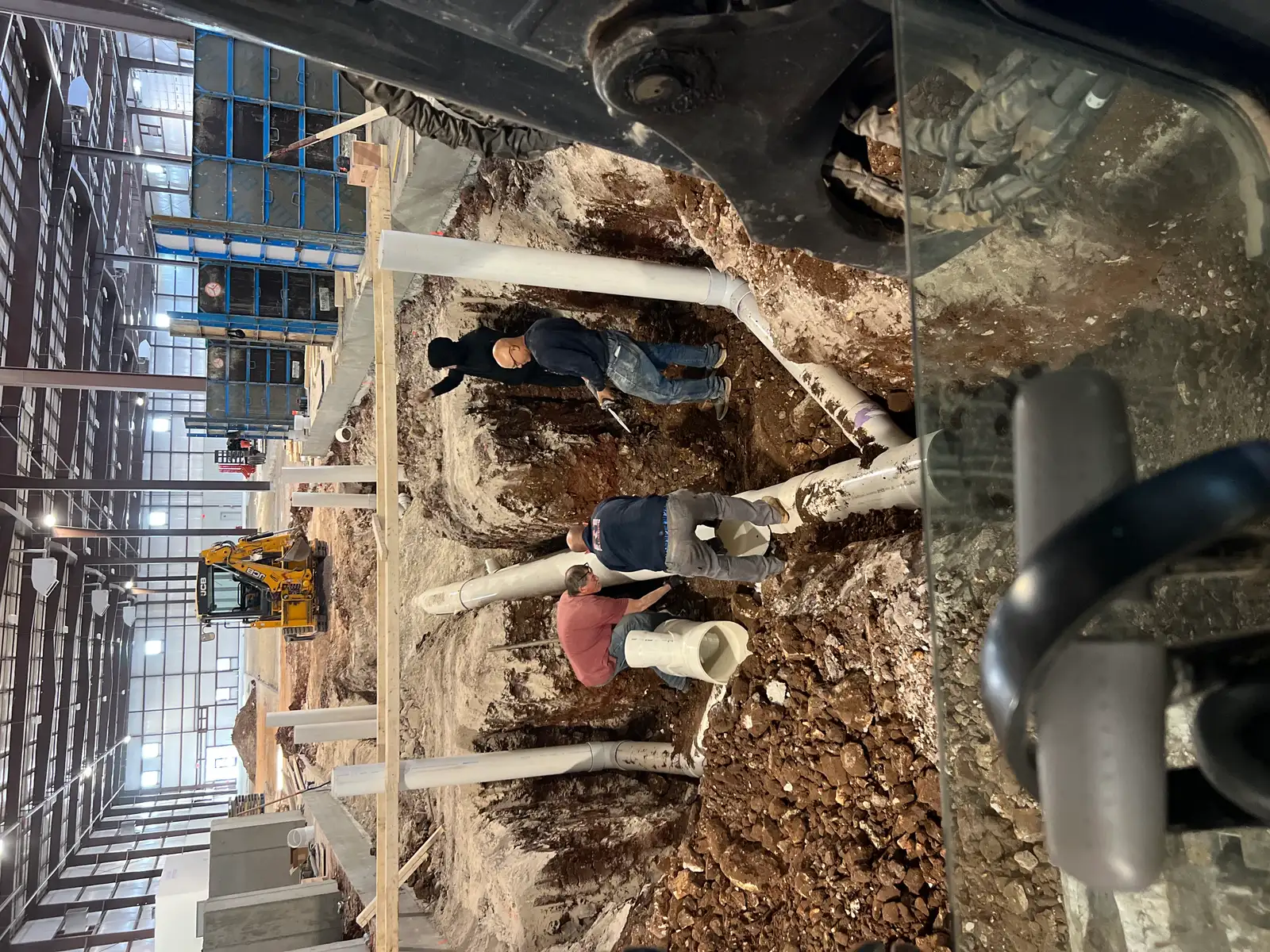
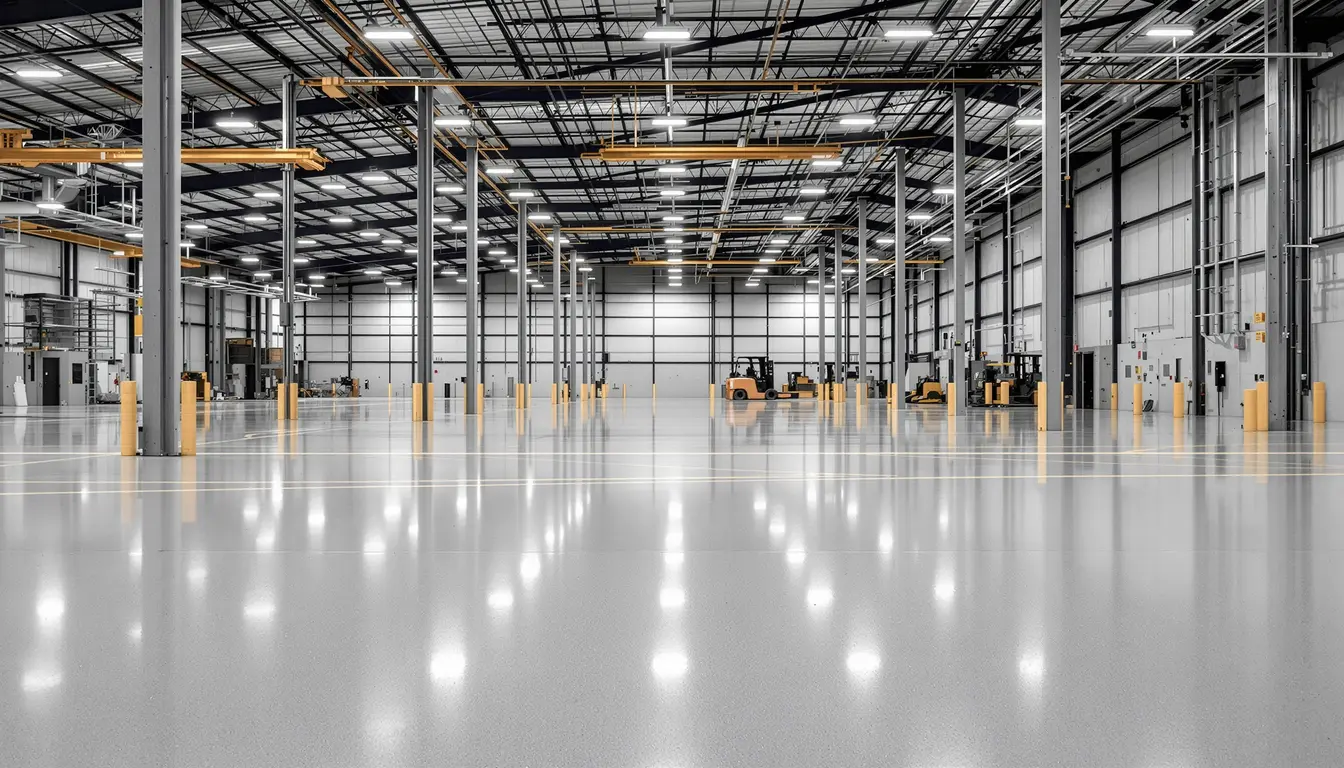
Warehouse and industrial concrete floors carry fundamentally different loads than residential flatwork — racking systems, forklift traffic, and pallet movement make flatness tolerances, joint design, and surface hardness the variables that determine whether the floor works long-term. Smithville Concrete Services pours commercial and industrial floor slabs for facilities throughout the north KC metro, from Northland warehouse operations to light industrial and logistics spaces.
Free Estimate
Request a Free Warehouse & Industrial Floors Estimate
What You Get
A Floor That Supports Your Operations Long-Term
A well-designed warehouse or industrial floor provides the surface flatness and load capacity that operations, equipment, and storage systems depend on. Poorly designed or under-spec floors create forklift issues, racking alignment problems, and ongoing maintenance costs that exceed the savings from cutting corners at the pour.
- New warehouse and industrial floor slab installation
- Light industrial floor slabs for manufacturing and assembly spaces
- Logistics and distribution center floor pours
- Sub-slab preparation including vapor barrier and drainage
- Fiber-reinforced and rebar-reinforced floor options
- Surface finishing to specified flatness tolerances
Common Projects
When Homeowners and Businesses Call Us for Warehouse & Industrial Floors
New warehouse or distribution facility
A new construction project requiring a floor slab designed for the specific operational loads — forklift types, racking systems, and traffic patterns.
Expanding an existing facility
Adding floor area to an existing warehouse or industrial space, tying new concrete into the existing slab with proper joint treatment.
Replacing a deteriorated slab
An existing floor that has deteriorated to the point where operations are affected — cracking at joints, surface pop-outs, or differential settlement between panels.
Light industrial conversion
Converting an existing building for light industrial or manufacturing use, requiring a floor upgrade to support the intended loads.
Cold storage or food-grade facility
Facilities with specific floor requirements for temperature cycling, hygiene, or surface hardness.
Technical Standards
What Makes a Well-Installed Warehouse & Industrial Floors
Floor flatness specifications
Warehouse floors have measurable flatness tolerances — Floor Flatness (FF) and Floor Levelness (FL) numbers — that determine whether forklifts operate smoothly and racking systems align correctly. These are specified before the pour and verified after.
Joint design for forklift traffic
Forklift wheels crossing joints cause impact loading that damages joint edges over time. Armored joint systems, proper joint spacing, and load-transfer design protect joint edges in high-traffic forklift environments.
Steel fiber vs. rebar reinforcement
Steel fiber reinforcement (distributed throughout the mix) reduces surface cracking and is common in warehouse floors. Traditional rebar is used for heavier structural loads. The right choice depends on the load type and operational requirements.
Vapor barrier and sub-slab moisture control
Moisture migration through an interior slab causes problems for flooring systems, equipment, and stored goods. A properly installed vapor barrier under the slab is standard for enclosed facilities.
Surface hardeners
Dry-shake surface hardeners increase surface abrasion resistance significantly. This is standard practice for warehouse floors where forklift tire wear and pallet drag would otherwise degrade the surface over time.
Local Context
Warehouse & Industrial Floors in Smithville and the North KC Metro
Subgrade Preparation in KC
Industrial floor performance depends heavily on what is under it. In the KC area, clay subgrades require thorough preparation — proper fill, compaction verification, and in some cases subgrade stabilization — before any structural floor is poured.
Moisture from KC Clay
Moisture vapor emission from KC clay through the slab is a real concern for facilities with moisture-sensitive flooring systems or stored goods. Vapor barrier specification and sometimes additional vapor emission testing are part of proper industrial floor practice.
How It Works
Getting a Warehouse & Industrial Floors Estimate
Request a Quote
Call or submit the estimate form. We ask a few questions about your project and confirm availability for a site visit.
Site Visit and Written Quote
We assess the site in person — dimensions, soil, drainage, access, scope. You receive a written quote with specs included.
Prep and Pour
We arrive on schedule. Excavation, base work, forms, pour, finish, and control joint work — most residential projects are done in a single visit.
Cure and Walk-Through
We walk the project with you when complete. Cure timeline, deicer guidance, care instructions, and any questions before we leave.
FAQ
Common Questions About Warehouse & Industrial Floors
What PSI concrete is used for warehouse floors?
How thick should a warehouse floor slab be?
What is the difference between FF and FL numbers?
Can you pour a new floor over an existing slab?
Related Services
Foundations & Sitework
Foundations, slabs, preparation, and sitework for residential additions and commercial scopes.
Foundations & SiteworkParking Lots
Commercial parking lot concrete, exterior flatwork, access surfaces, and property frontage improvements.
Parking LotsADA Concrete
ADA ramps, accessible entries, walkways, and commercial access concrete.
ADA ConcreteCurbs & Gutters
Curbs, gutters, drainage edges, parking lot boundaries, and commercial sitework concrete.
Curbs & GuttersWe provide warehouse & industrial floors throughout the north KC metro — Smithville, Kearney, Platte City, Parkville, Kansas City, Liberty, Gladstone. View all service areas
Get a Free Warehouse Floor Estimate
Call or submit a request online and we will follow up within one business day.