
Residential Concrete
Concrete Retaining Walls in Smithville, MO
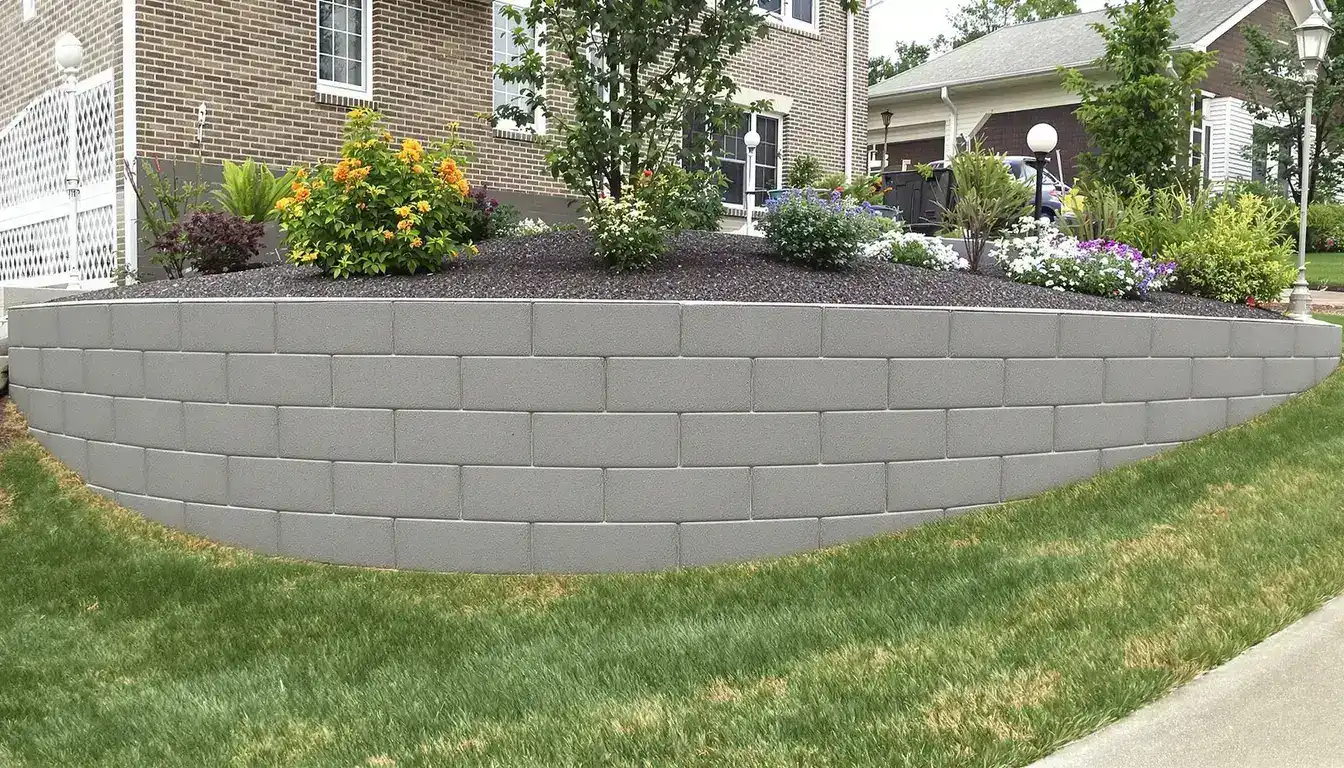
Concrete retaining walls hold grade changes, create usable flat yard space on sloped properties, and manage the drainage that matters when the soil is Clay County expansive clay. A wall that handles wet, swelling clay and 60-plus freeze-thaw cycles per winter requires footings below the frost line and drainage details that prevent hydrostatic pressure buildup. We spec and build to those conditions across Smithville and the surrounding north KC metro.
Free Estimate
Request a Free Retaining Walls Estimate
What You Get
Usable Yard Space and Stable Grade Control
A well-built retaining wall converts a sloped yard into usable terraced areas, holds a patio level on a hillside lot, keeps landscape beds defined, and manages drainage in areas that previously eroded with every rain. It is structural work with a visible outdoor living result.
- Concrete retaining walls for sloped lots, terracing, and grade changes
- Walls supporting raised patio areas, landscape beds, and outdoor features
- Drainage system integration: weep holes, drainage tile, and backfill gravel
- Wall heights from 1 foot up to 4+ feet depending on site and permit requirements
- Formed concrete walls and poured-in-place construction
- Coordination with adjacent patio pours and landscaping scopes
Common Projects
When Homeowners and Businesses Call Us for Retaining Walls
Sloped lot with no usable yard
A yard that runs steeply away from the house, making any flat outdoor use area impractical without terracing.
Grade change between structures
A significant elevation change between the driveway, patio, lawn, and surrounding yard that needs a defined, retained edge.
Erosion at property edge or slope
Slope erosion from rain runoff that is progressively undermining landscaping, lawn, or adjacent structures.
Supporting a patio on a hillside
Creating a level patio area on a sloped lot requires a retaining wall on the downhill side to hold the grade and create a defined outdoor space.
Landscape bed definition
Low retaining walls used to create raised planting beds, define landscape borders, and provide a clean edge between lawn and planted areas.
Technical Standards
What Makes a Well-Installed Retaining Walls
Footing depth below frost line
In the KC area, the frost line is typically 24-36 inches below grade. Retaining wall footings must go below this depth to prevent frost heave from shifting the wall over time.
Drainage behind the wall
Hydrostatic pressure from water-saturated soil is the most common cause of retaining wall failure. Weep holes, drainage tile, and gravel backfill behind the wall allow water to escape rather than build up.
Wall thickness for the height
Taller walls require proportionally more concrete thickness and often require engineering review or permit. Walls over 4 feet in height typically require a permit and a structural assessment.
Reinforcement for load-bearing walls
Walls that must resist significant lateral pressure — from heavy backfill, vehicle loads above, or large soil mass — require appropriate rebar reinforcement in addition to adequate thickness.
Proper backfill compaction
The backfill behind the wall must be compacted in lifts — not dumped and left uncompacted. Poorly compacted backfill settles unevenly and increases the lateral pressure on the wall.
Local Context
Retaining Walls in Smithville and the North KC Metro
Hydrostatic Pressure After Rain
KC clay holds water efficiently. After heavy rain, the soil behind a retaining wall becomes saturated and the hydrostatic pressure against the wall face increases significantly. Drainage systems that allow this water to escape are essential to wall longevity.
Frost Movement on Wall Face
The face of a retaining wall cycles through freeze-thaw repeatedly each winter. Concrete walls with adequate thickness and proper mix design handle this well. Walls that are undersized for their height are more vulnerable to freeze-thaw damage at the surface.
Sloped Northland Lots
Many Smithville and north KC metro lots have meaningful elevation changes from front to back or side to side. This is a common feature of the terrain here — retaining wall projects are a regular part of residential concrete work in this area.
How It Works
Getting a Retaining Walls Estimate
Request a Quote
Call or submit the estimate form. We ask a few questions about your project and confirm availability for a site visit.
Site Visit and Written Quote
We assess the site in person — dimensions, soil, drainage, access, scope. You receive a written quote with specs included.
Prep and Pour
We arrive on schedule. Excavation, base work, forms, pour, finish, and control joint work — most residential projects are done in a single visit.
Cure and Walk-Through
We walk the project with you when complete. Cure timeline, deicer guidance, care instructions, and any questions before we leave.
FAQ
Common Questions About Retaining Walls
Do I need a permit for a concrete retaining wall?
How deep should a retaining wall footing be?
How tall can a concrete retaining wall be?
How long does a concrete retaining wall last?
Related Services
Concrete Driveways
Driveway installation and replacement for daily access, curb appeal, drainage, and long-term use.
Concrete DrivewaysConcrete Patios
Patios and outdoor living concrete for backyards, grilling areas, seating spaces, and cleaner outdoor flow.
Concrete PatiosConcrete Repair & Replacement
Repair, resurfacing, replacement, and practical guidance for cracked, settled, or worn concrete.
Concrete Repair & ReplacementFoundations & Sitework
Foundations, slabs, preparation, and sitework for residential additions and commercial scopes.
Foundations & SiteworkWe provide retaining walls throughout the north KC metro — Smithville, Kearney, Platte City, Parkville, Kansas City, Liberty, Gladstone. View all service areas
Get a Free Retaining Wall Estimate
Call or submit a request online and we will follow up within one business day.