Concrete Repair
Concrete Repair and Replacement in Smithville, MO
Cracked driveways, settled patios, heaved walkways, and scaled surfaces are common in established Northland neighborhoods — and the right answer depends on what is actually causing the problem, not which option is more expensive. Smithville Concrete Services assesses concrete honestly and gives you a direct recommendation.
Free Estimate
Request a Free Concrete Repair & Replacement Estimate
What You Get
Concrete That Functions Again — Without Guessing at the Right Fix
The goal is concrete that works reliably and looks appropriate for its setting — not necessarily the most expensive option or the cheapest patch. Knowing the difference between a repair situation and a replacement situation saves homeowners real money over the long term.
- Site assessment to determine repair vs. resurfacing vs. replacement
- Crack routing and sealing for surface cracks without base failure
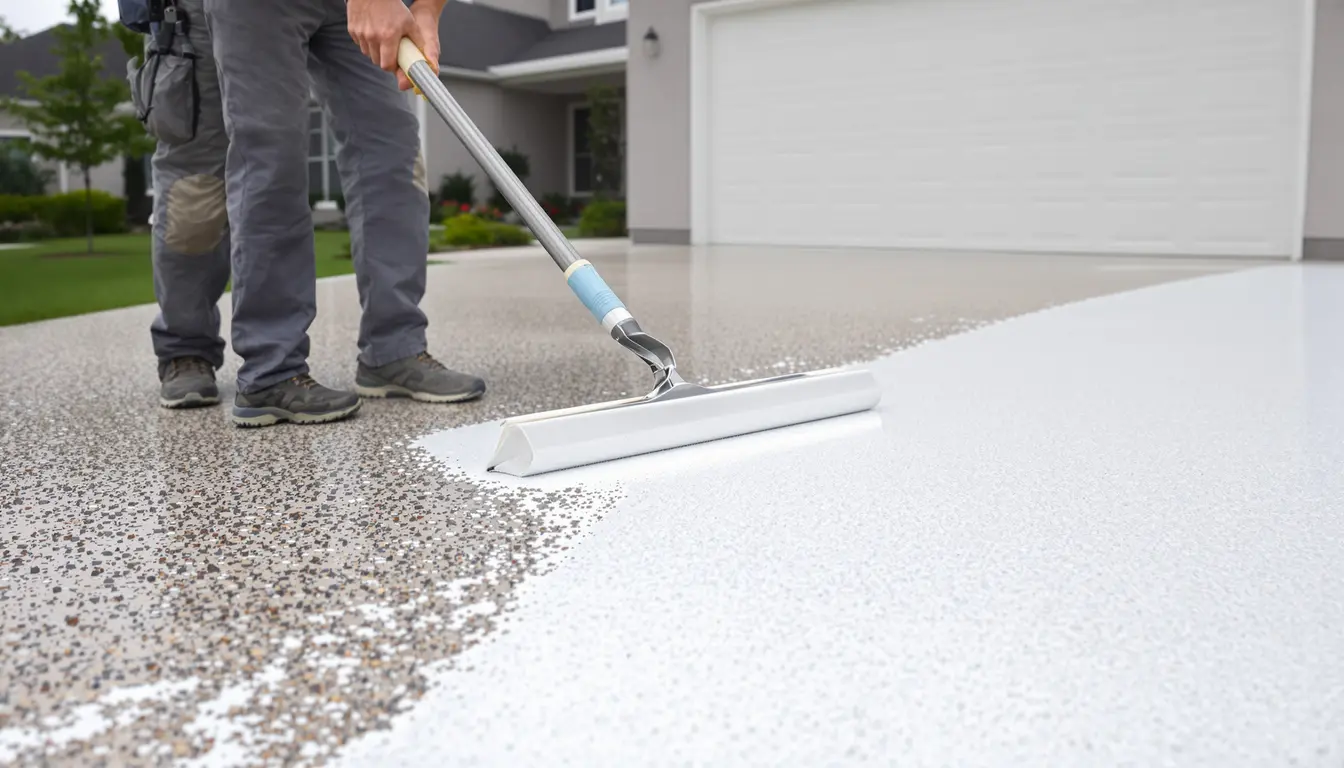
- Concrete resurfacing and overlay applications
- Partial panel replacement for sections with isolated base failure
- Full driveway, patio, or walkway replacement
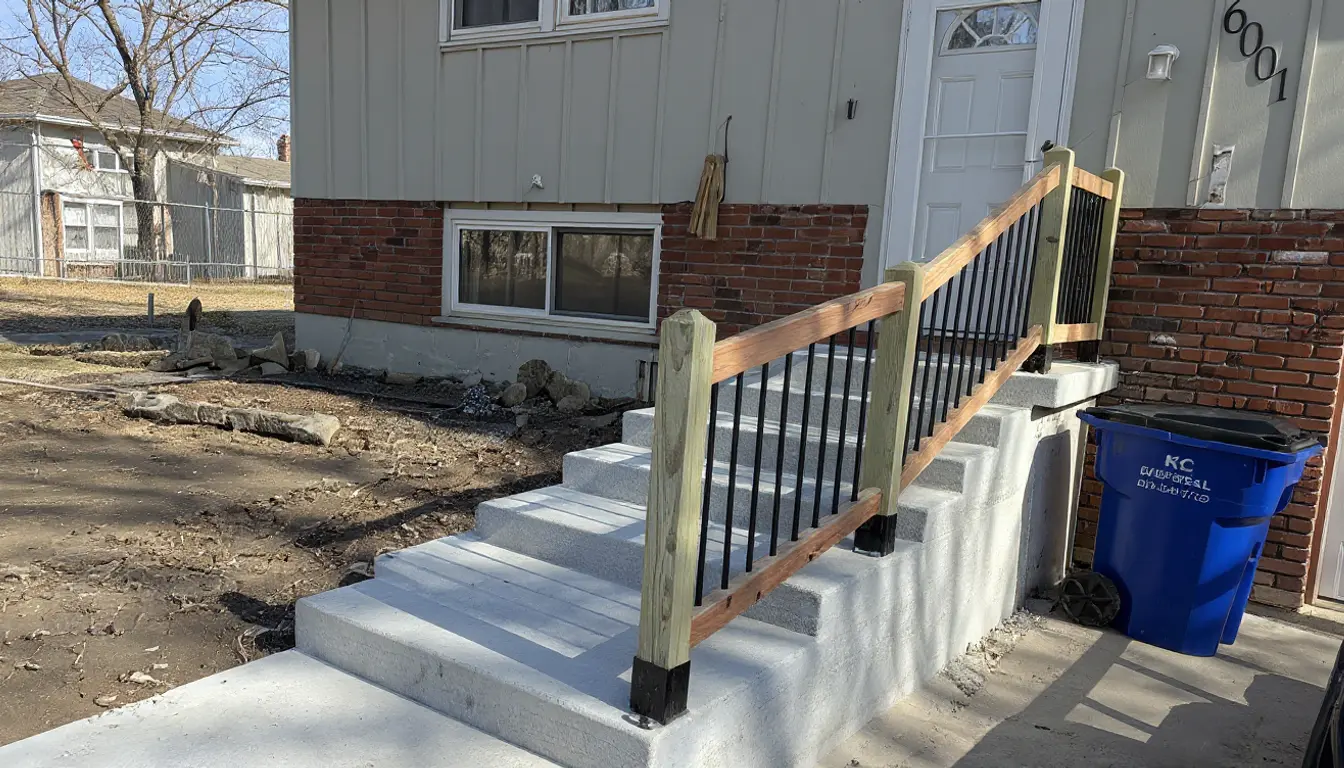
- Trip hazard elimination for heaved sidewalk sections
Common Projects
When Homeowners and Businesses Call Us for Concrete Repair & Replacement
Cracked driveway or patio
Surface cracks that have been widening over time — some that move seasonally, others that have settled on one side. Not sure if repair or replacement is the answer.
Heaved or settled sections
Sections of a driveway, walkway, or patio that have lifted or sunk relative to adjacent sections, creating uneven surfaces and potential trip hazards.
Surface scaling or spalling
Concrete surface that has deteriorated from deicer exposure, age, or inadequate original curing — flaking, pitting, or rough texture where the surface used to be smooth.
Drainage failure
Sections that now pond water because the grade has changed or the slab has settled — creating water near the foundation or on walking surfaces.
30+ year old concrete reaching end of life
Driveways and patios in Northland neighborhoods poured in the 1970s and 80s that are at the end of their practical service life — beyond what repair or resurfacing can reasonably address.
Technical Standards
What Makes a Well-Installed Concrete Repair & Replacement
Diagnosing the cause before choosing the repair
A crack from shrinkage during curing is different from a crack caused by base failure. Treating base failure with surface repair does not fix the underlying problem — the same crack will return.
Base integrity determines the right approach
If the gravel or soil base beneath the slab has eroded, washed out, or compacted unevenly, surface repair is temporary at best. Base failure means replacement with proper sub-base work.
Resurfacing only works on structurally sound slabs
Concrete resurfacing and overlays add a new top layer to existing concrete. This works well on cosmetically degraded but structurally intact slabs. It does not work on slabs with active base movement or structural cracking.
Partial panel replacement vs. full replacement
Individual panels with isolated failure can sometimes be replaced independently. When failure is widespread or the base is compromised across the whole area, full replacement is typically more cost-effective than multiple partial repairs.
Honest scope assessment matters
We give a direct recommendation on whether repair, resurfacing, or replacement makes the most sense — not always the more expensive option. If resurfacing is the right answer, that is what we recommend.
Local Context
Concrete Repair & Replacement in Smithville and the North KC Metro
KC Clay Failure Patterns
Concrete on KC clay shows predictable failure patterns over time: cracking at control joints that widen, sections that settle as the clay beneath shrinks, and sections that heave where moisture accumulates. These patterns indicate what the base is doing.
Freeze-Thaw Scaling
Surface scaling from freeze-thaw action accelerates when deicers have been applied to young or under-spec concrete. A rough, pitting surface that was once smooth is a common sign of this. Resurfacing addresses the appearance; replacement addresses it structurally.
Age of Northland Concrete
Driveways and patios in established Smithville, Kearney, and Liberty neighborhoods that were poured in the 1970s and 80s are 40-50 years old. Many are at or past the point where repair makes economic sense — replacement with current spec concrete is the more practical investment.
How It Works
Getting a Concrete Repair & Replacement Estimate
Request a Quote
Call or submit the estimate form. We ask a few questions about your project and confirm availability for a site visit.
Site Visit and Written Quote
We assess the site in person — dimensions, soil, drainage, access, scope. You receive a written quote with specs included.
Prep and Pour
We arrive on schedule. Excavation, base work, forms, pour, finish, and control joint work — most residential projects are done in a single visit.
Cure and Walk-Through
We walk the project with you when complete. Cure timeline, deicer guidance, care instructions, and any questions before we leave.
FAQ
Common Questions About Concrete Repair & Replacement
How do I know if my concrete needs repair or replacement?
What is concrete resurfacing and when does it make sense?
Can you repair just part of a driveway?
What causes concrete to heave?
Is concrete mudjacking or polyurethane lifting an option?
Related Services
Concrete Driveways
Driveway installation and replacement for daily access, curb appeal, drainage, and long-term use.
Concrete DrivewaysConcrete Patios
Patios and outdoor living concrete for backyards, grilling areas, seating spaces, and cleaner outdoor flow.
Concrete PatiosSidewalks & Walkways
Walkways, sidewalks, front entries, and access paths for homes and commercial properties.
Sidewalks & WalkwaysFoundations & Sitework
Foundations, slabs, preparation, and sitework for residential additions and commercial scopes.
Foundations & SiteworkWe provide concrete repair & replacement throughout the north KC metro — Smithville, Kearney, Platte City, Parkville, Kansas City, Liberty, Gladstone. View all service areas
Get a Free Repair or Replacement Assessment
Call or submit a request online and we will follow up within one business day.